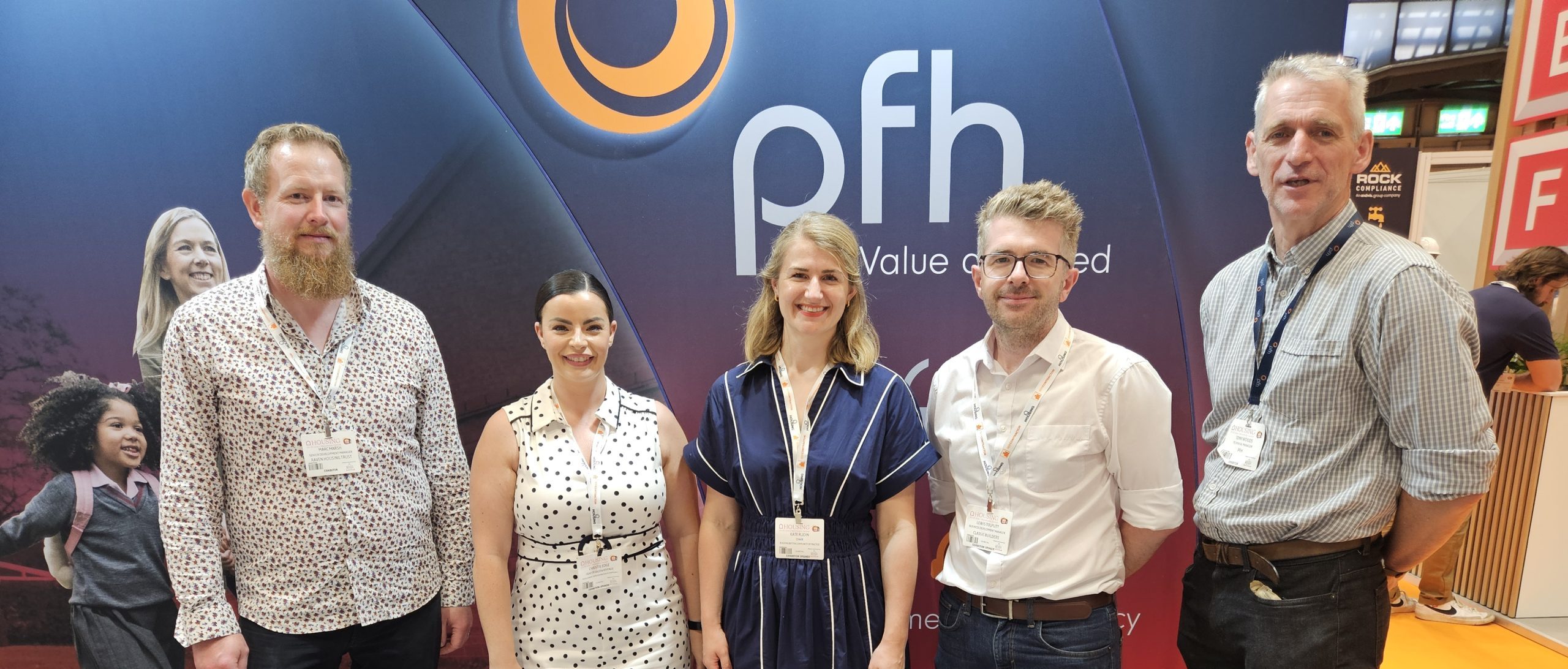
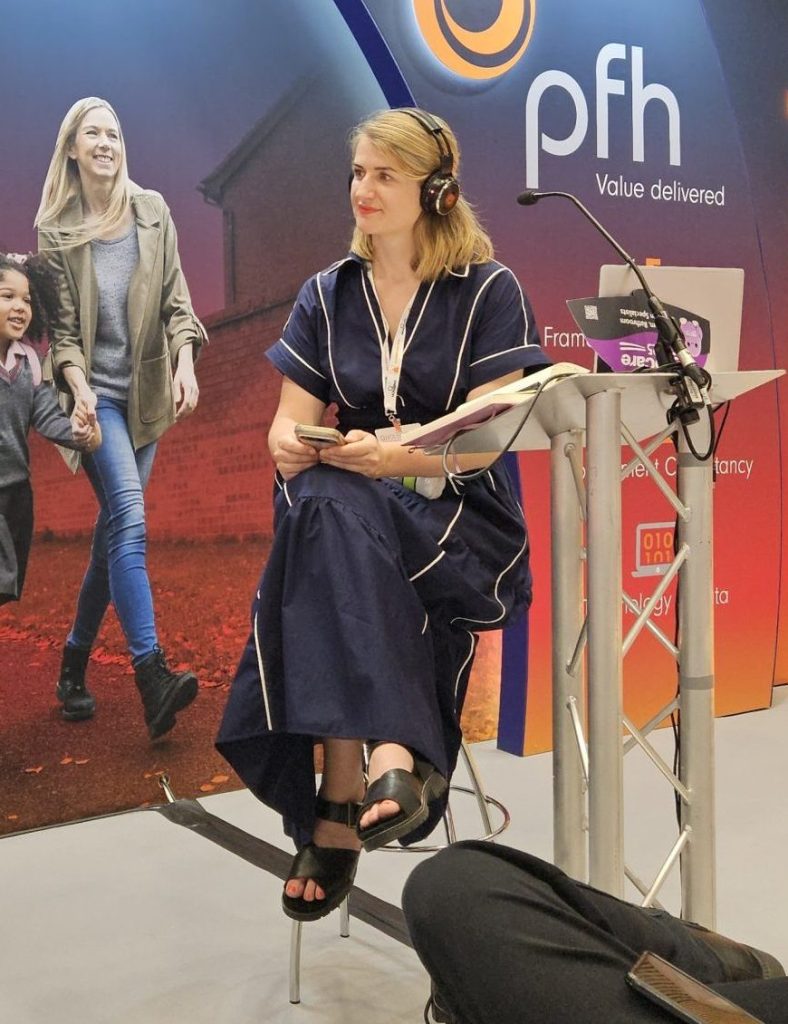
Katie Rudin, Chair of Building Better Community of Practice, recently chaired a panel discussion at Housing 2026, on how procurement can secure predictable quality, safety and net zero outcomes from day one.
As our new prime minister makes council housebuilding a defining mission, with a promise to deliver the largest programme since the postwar period, the pressure to build faster is gaining force.
Speed alone isn’t enough, to get homes “right first time” means designing around the end user to get the right standards embedded as early as possible.
This was the thread running through a recent panel discussion, chaired by Katie Rudin, Housing and Innovation Director at Akerlof and co-chair of Building Better Community of Practice, on how procurement can secure predictable quality, safety and net zero outcomes from day one.
A strong cross-section of the sector was reflected in the panel: Tony Woods, Technical Manager at Procurement for Housing; Lewis Tolputt of Classic Builders, the largest private contractor in Devon and Cornwall; Mark Marsh, Senior Development Manager at Raven Housing Trust; and Christie Edge, Head of Sales at Modular Wise (Places for People). The overall sense in the room was of a tipping point, with MMC gaining ground, with many on the panel exploring and implementing MMC to help them cross the chasm and enable the technology to enter the mainstream.
Start early, and design for the user
Christie (Modular Wise and Places for People) anchored the conversation on the reality we sometimes forget: everything should be designed around the people who will actually live in these homes. From good design, the speed, consistency and quality follow.
The importance of early engagement, and what that means in reality, ran through the whole discussion. Tony (Procurement for Housing) spoke about bringing the supply chain in early to protect buildability, quality and sustainability, and about how a steady pipeline of business lets suppliers invest in doing things well.
“I think a lot of times people put procurement as a problem, but it's because they look at it at the end of the process and they're trying to get square peg in a round hole. You need to move it to the start and engage earlier with the supply chain to try and guarantee that success for the project.”
– Tony Woods, Procurement for Housing
Lewis (Classic Builders) picked this up from the contractor’s side, arguing for transparency and collaboration between clients and contractors to mitigate the problems that otherwise surface late and expensively.Advising before planning has helped for the whole life cycle of the building to be considered on schemes and is exactly the kind of practice the sector should be normalising.
“We need to consider when we are looking at any new build development, whether it's permanent or temporary; who are we actually building for? Who is the end user within that? And making sure that we design a scheme around that".
– Christie Edge, Modular Wise and Places for People
“By being by being transparent and bringing people on board early, the amount of additional benefits that you can have are unbelievable.”
– Lewis, Classic Builders
Learning in the open
The panelists were honest about their mixed experiences with MMC, including a project where the original contractor went into administration – a scheme that, despite everything, went on to be an exemplary example of what MMC can achieve.
Those experiences teach things that can’t be learned any other way: the importance of understanding the manufacturing process itself, of planning for groundwork conditions, and of educating the interfacing trades so the whole site works with the system rather than against it.
“It’s not rocket science - it's a timber frame built in a factory that so happens to be then wrapped with a bit of steel and put on a lorry to be delivered to site. It's still the same wiring. It's still plasterboard. We're not creating magic...It's just about quality assurance and consistency of delivery, and understanding that it does get muddy on the field outside.”
– Mark Marsh, Raven Housing Trust
The negative perception of MMC has been shaped by high-profile failures across the board, and that perception lingers. Rather than retreating from MMC, the answer is to have honest conversations about what each system can and can’t do, and to keep learning in the open.

MMC as part of the solution
For all the challenges, the benefits still come through clearly. For housing associations in particular, MMC and net zero increasingly go hand in hand, an alignment that matters more every year. Lewis (Classic Builders)spoke about Passivhaus schemes, and how MMC is integral to them: not just the precision and tighter tolerances you get from building in a factory, but the skills and consistency that a controlled environment makes possible. If the sector wants good-quality homes at scale, the factory is where that consistency begins.
MMC is part of the offering, not the whole offering. It won’t replace land-led regeneration or traditional build. A mix is needed, but it is integral to the next generation of predictable, quality homes.
Bridging the chasm
Crossing to the mainstream, the panel agreed, is largely a matter of education: understanding clients’ worries and meeting them with evidence of what MMC can actually deliver.
Asked what the sector should be looking for to build resilience, the panel started not with zero carbon but with affordability, though the two go hand in hand. A well-insulated, low-energy home is a cheaper to run and live in over the long term, so that low energy bills ease energy poverty, and provide homes that stay comfortable in a warming climate.
What came through most clearly was how much the industry is learning, and how openly it is sharing that learning. The homes the country needs are within reach, and as the sector has the honest conversations earlyand designs around the people who’ll live in these homes, crossing starts to look less like a leap and more like the next step.