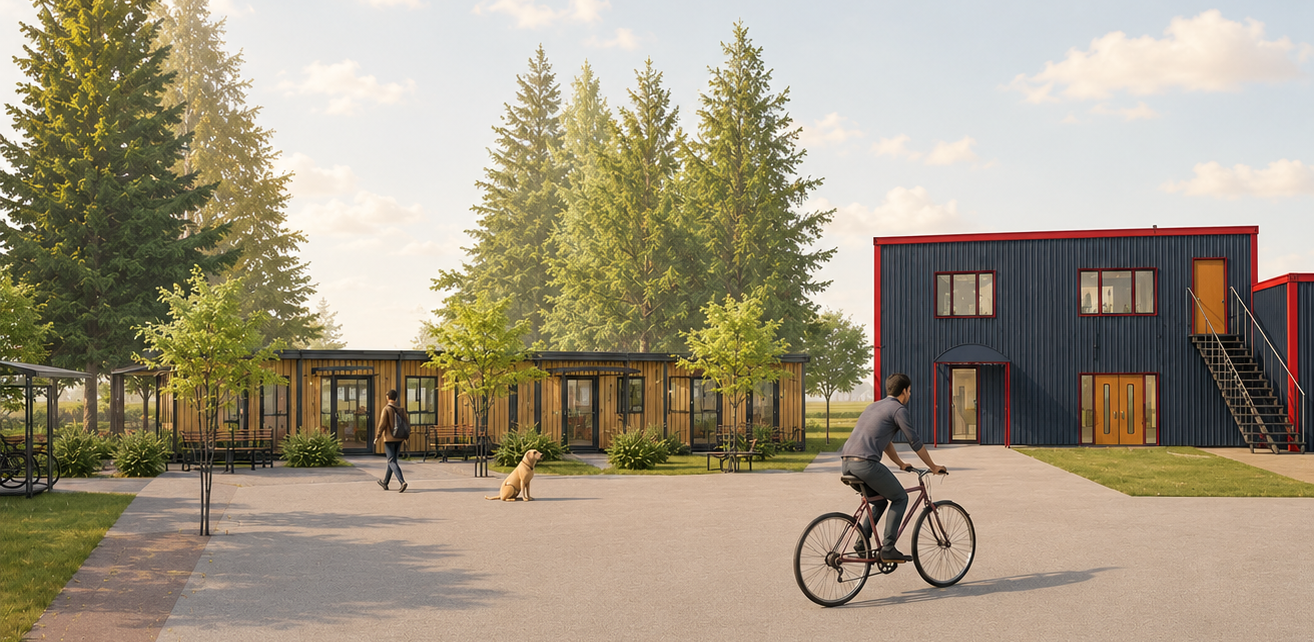
Above: Barnwell Drive Proposal, ITAC CLT
Building More Than Homes
Aga Podgajna is an architect and urban designer working across London and Warsaw, with a particular focus on housing and building resilient, sustainable communities. She is a systems thinker who cares deeply about putting residents at the heart of the design process.
Her piece for BB:CoP explores why lasting impact comes not from housing alone, but from creating the conditions for residents to rebuild their lives — and why this requires a more joined-up, systemic approach.
Aga is also the founder of Resilient Futures and writes here as Housing Development Lead at It Takes a City Community Land Trust.

Architecture is, at its heart, an act of optimism. It begins with the belief that the places we create can improve people’s lives; that thoughtful design can foster dignity, strengthen communities and create opportunities where they did not exist before.
The path out of homelessness is rarely linear. It is shaped by setbacks and new beginnings, by support networks, opportunities and time. Most importantly, it requires stability.
The work of It Takes a City Community Land Trust (ITAC CLT) in Cambridge is underpinned by this conviction. Through the delivery of small modular housing communities for people experiencing homelessness, it challenges us to think differently about what housing should achieve. Good design alone cannot end homelessness, but it can create the conditions in which people are able to rebuild their lives with dignity and confidence.
Rather than providing accommodation with arbitrary time limits, these communities offer high-quality modular homes where people can stay for as long as they need. Residents have the stability to look for work, reconnect with support services, rebuild confidence and, when they are ready, move into permanent housing. They are designed as stepping stones, not because people are expected to move on quickly, but because lasting change happens at different speeds for different people.
Modular construction is particularly well suited to this model. The homes can be delivered quickly and, importantly, can be relocated and reused, providing flexibility in how land is used over time. This creates opportunities to make use of small pockets of publicly or organisationally owned land through long-term leases, where acquiring land outright would be difficult or prohibitively expensive.
By reducing the need for land acquisition and making use of sites that might otherwise remain underused, the model can lower overall delivery costs while providing high-quality, self-contained homes. Temporary ownership or availability of land does not have to mean temporary or poor-quality accommodation.
ITAC CLT first put this model into practice through Joy’s Corner, our pilot project in Cambridge. Completed in November 2024, the scheme provides four modular homes on a small site leased from Cambridge City Council for five years, with an option to extend for a further five. The modular timber -frame homes were constructed off-site and transported to Cambridge, where they were installed on foundation pads before being furnished and prepared for their first residents. All four homes were occupied by February 2025
Joy’s Corner, our first completed community in Cambridge, delivered four modular homes for people transitioning out of homelessness. Its success has demonstrated the potential of this model in practice and provided valuable lessons that are shaping the communities we are developing next.
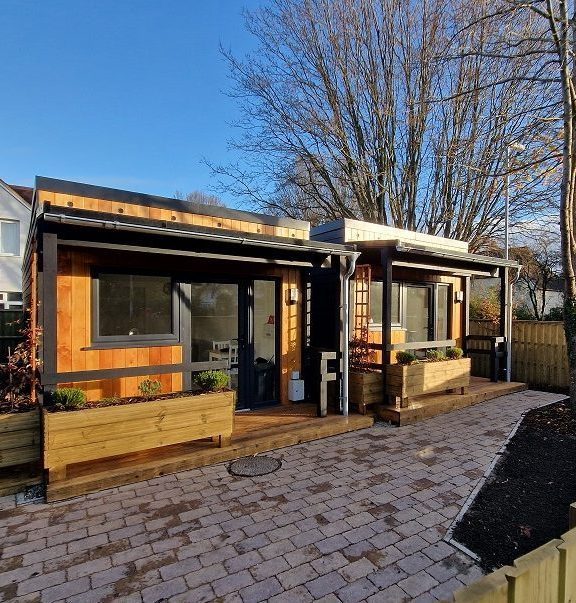
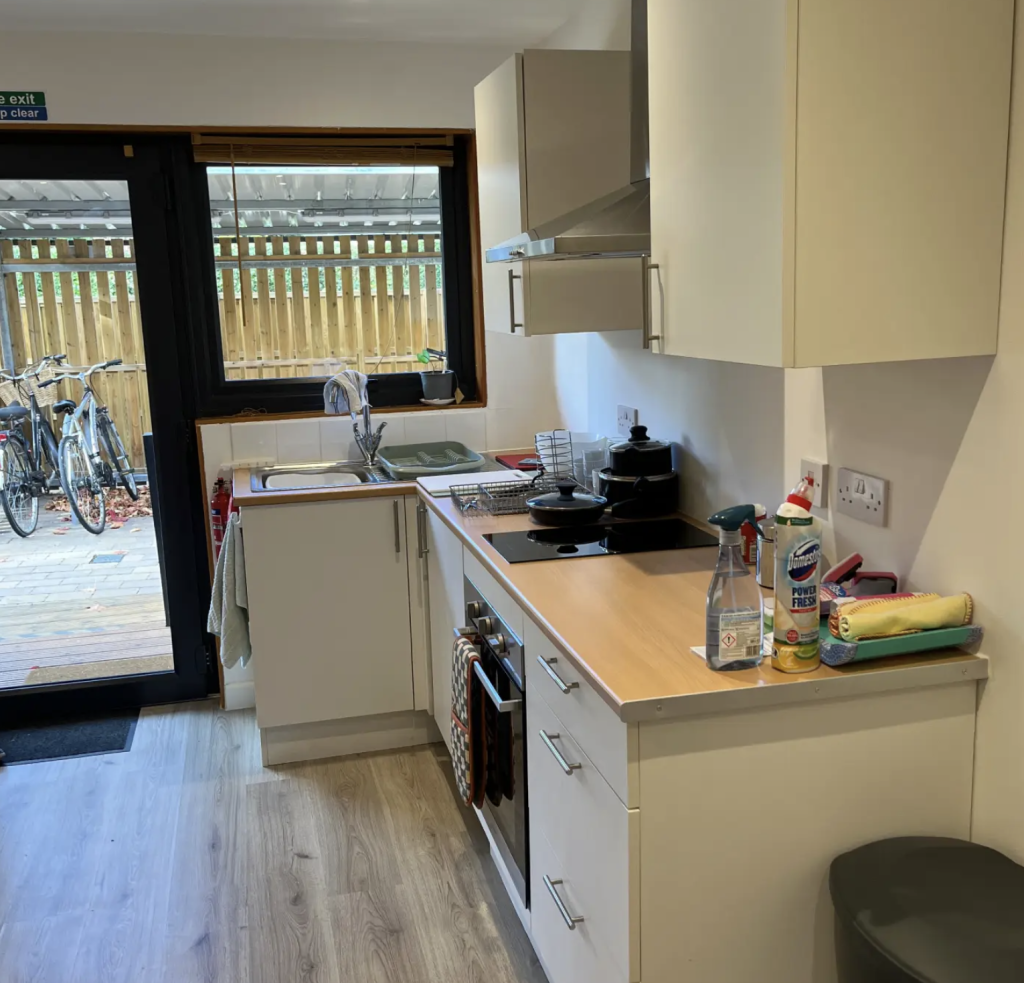
Above: Exterior and Interior of modular homes at Joy’s Corner
Building on the success of Joy’s Corner, we are now progressing two further communities, including Barnwell Drive, located adjacent to Cambridge Airport an area that will soon become one of the largest development locations in the region. We see this as an important statement. Homes for people experiencing homelessness should not be hidden away or treated as an afterthought. They should form part of the future neighbourhoods we are creating, with access to employment, public transport, healthcare and community life from the outset. Our approach to delivering housing for people transitioning out of homelessness has been recognised with the Royal Town Planning Institute East of England Award for Best Homes and Communities Scheme and a Community Land Trust Award for Beautiful Community Led Homes.
Yet the greatest lesson these projects have taught us is not about modular construction. It is that homelessness cannot be solved through housing alone.
It is a systems challenge that demands a systems response.
At ITAC CLT, we work as a team. From our experience local authorities play an important role in identifying opportunities, coordinating delivery, and enabling innovation through planning policy. Community Land Trusts provide long-term stewardship, ensuring homes remain affordable and rooted in their communities. Architects, planners, and designers help create places that promote dignity, safety, and belonging. Homelessness charities bring invaluable experience, trusted relationships, and ongoing support for residents, while healthcare providers, employment services, and local communities all contribute to helping people build sustainable futures.
The private sector also has a significant role to play. Land awaiting future development presents opportunities for meanwhile communities that can provide safe, high-quality homes rather than remaining vacant for years. Developers and landowners can help unlock sites, while Section 106 contributions can support projects that deliver meaningful social value alongside new development. These mechanisms should not be viewed simply as planning obligations, but as opportunities to create lasting partnerships and tangible social impact.
When each organisation contributes what it does best, the outcome is far greater than the sum of its parts.
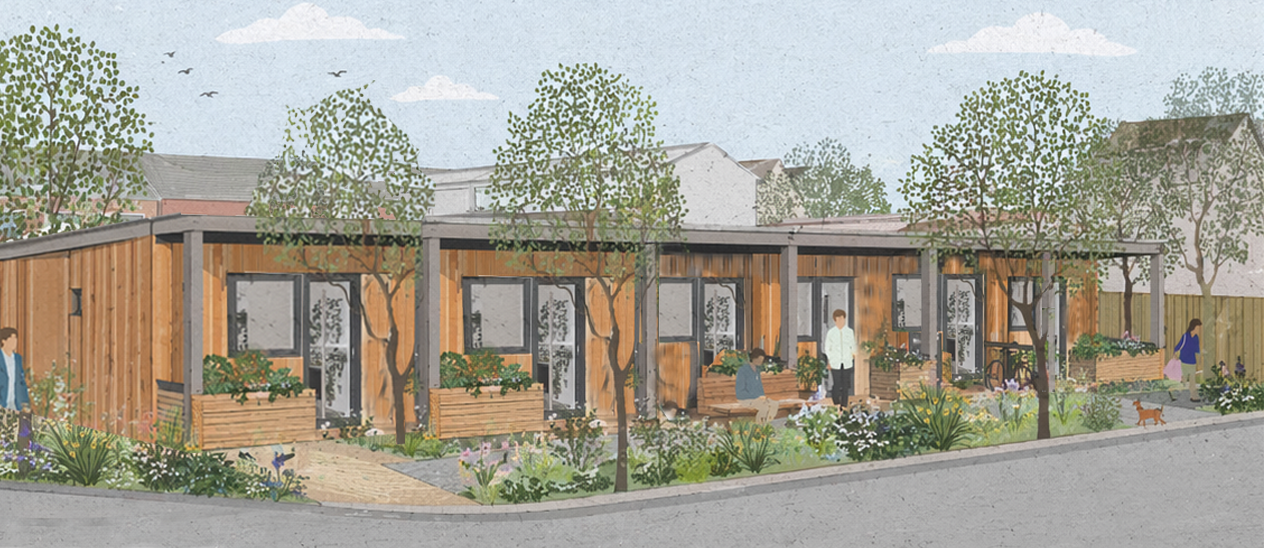
Above: Woodrow Way proposal, building on the success of Joy’s Corner